
How Often Should You Restripe a Commercial Parking Lot?
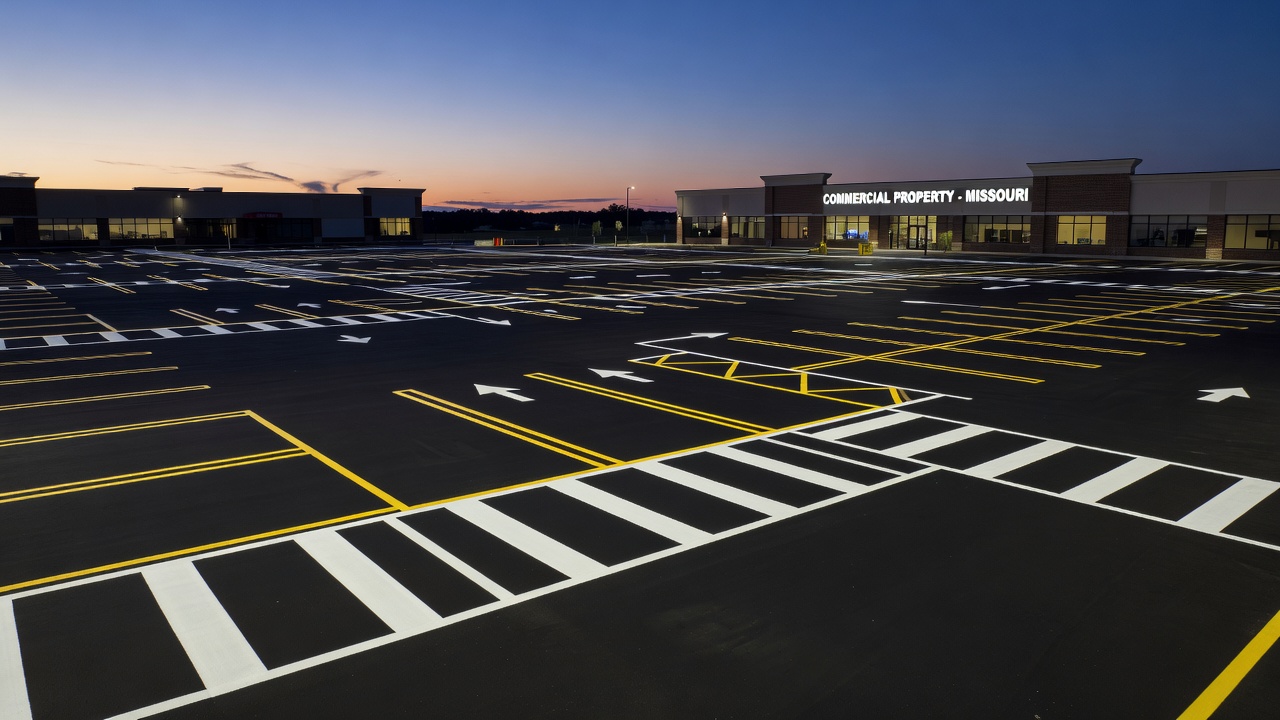
The standard recommendation for Missouri commercial parking lots is to restripe every 18–24 months. UV exposure, freeze-thaw cycles, heavy traffic, snow removal, and sealcoating schedules all shorten the life of painted markings. In Springfield and Greene County, lots that serve retail, medical, or warehouse traffic often fade faster than owners expect because the paint is constantly exposed to sun, moisture, and vehicle abrasion.
That timeline is only a rule of thumb, though. A lightly used office park on a shaded street may hold paint longer than a busy retail center on East Sunshine or a distribution property near the James River corridor. The real answer is based on visibility, safety, and compliance — not the calendar alone. If a driver cannot quickly identify stall lines, crosswalks, fire lanes, or accessible spaces, the lot is already overdue.
Signs Your Lot Needs Restriping Now
- Faded or invisible stall lines
- Customer complaints about parking disputes
- ADA symbols are no longer clearly visible
- Fire lane lettering is peeling or hard to read
- Directional arrows no longer match traffic flow
- Sealcoating or repaving covered old striping
- Tenant turnover changed how the lot is being used
- Property looks tired even though the asphalt is still in good shape
Why Striping Fades Faster in Southwest Missouri
Springfield weather is tough on asphalt markings. Hot summers break down paint, while winter moisture and freeze-thaw cycles create small surface failures that make lines disappear faster. In higher-traffic commercial areas, turning tires also scrub away the most-used stall edges and arrows.
Properties in Nixa, Ozark, Republic, Battlefield, and Rogersville see the same general pattern, but the exact wear depends on use. Grocery-anchored retail centers, medical offices with constant in-and-out traffic, and warehouse properties with trucks and forklifts all wear differently. That is why a one-size-fits-all resurfacing schedule does not work very well in this market.
How to Decide Whether to Repair, Restripe, or Rework the Layout
If only a few lines are fading, a standard restripe is usually enough. If the layout is confusing, if stalls do not fit the current tenant mix, or if ADA and fire lane markings are outdated, a partial redesign may be the smarter choice. For lots that were repaved or sealcoated recently, a full layout reset can be the best chance to correct old mistakes.
Think about the property as a traffic system. A striping refresh is not just cosmetic — it affects how customers enter, where delivery vehicles stop, whether pedestrians can move safely, and whether the lot communicates that the property is professionally managed. For property managers, that has a direct impact on tenant satisfaction and maintenance complaints.
Common Springfield Area Scenarios
In Springfield, lots along major commercial corridors often need more frequent attention because of higher turnover. A strip mall on a busy road may need restriping every 12–18 months, while a smaller office building on a quieter side street may last longer. Warehouses and industrial sites can also wear quickly, especially where trailers turn tightly or forklifts cross pedestrian paths.
In growing areas like Nixa and Ozark, new construction and tenant changes create a different problem: the original striping plan may no longer fit the property. When that happens, waiting for lines to fade is the wrong strategy. Reworking the layout early can make parking smoother, reduce complaints, and support code compliance before it becomes a problem.
What Property Managers Should Put on a Maintenance Calendar
- Annual visual inspection of all pavement markings
- Photo documentation after sealing, milling, or repaving
- Scheduled review of ADA stalls and access aisles
- Fire lane and curb marking checks before peak seasons
- Restriping budget review every 12 months
That simple schedule helps avoid emergency work later. It is much easier to budget for a planned summer restripe than to scramble after an inspector, tenant, or customer raises a safety issue.
Why Waiting Usually Costs More
When striping gets too faded, drivers park inefficiently, traffic lanes become unclear, and the property starts to look neglected. Small problems turn into bigger ones: damaged stalls, missed accessible spaces, and avoidable liability concerns. In many cases, a timely restripe is cheaper than dealing with complaints or having to redo the layout after the property has already become confusing.
That is especially true for commercial buyers who depend on consistent curb appeal. A fresh lot makes the rest of the property look better, even if nothing else changed. For retail centers and medical offices, that matters. For warehouses and industrial sites, clarity and safety matter even more.
Bottom Line
If you are unsure whether it is time to restripe, look at the lot from a driver’s perspective. Can someone quickly tell where to park, where to drive, and where accessible or fire lane areas are located? If not, the lot should probably be reviewed now rather than later.
Schedule a free lot assessment in Springfield today.