
ADA Parking Lot Requirements in Missouri: What Every Property Owner Must Know
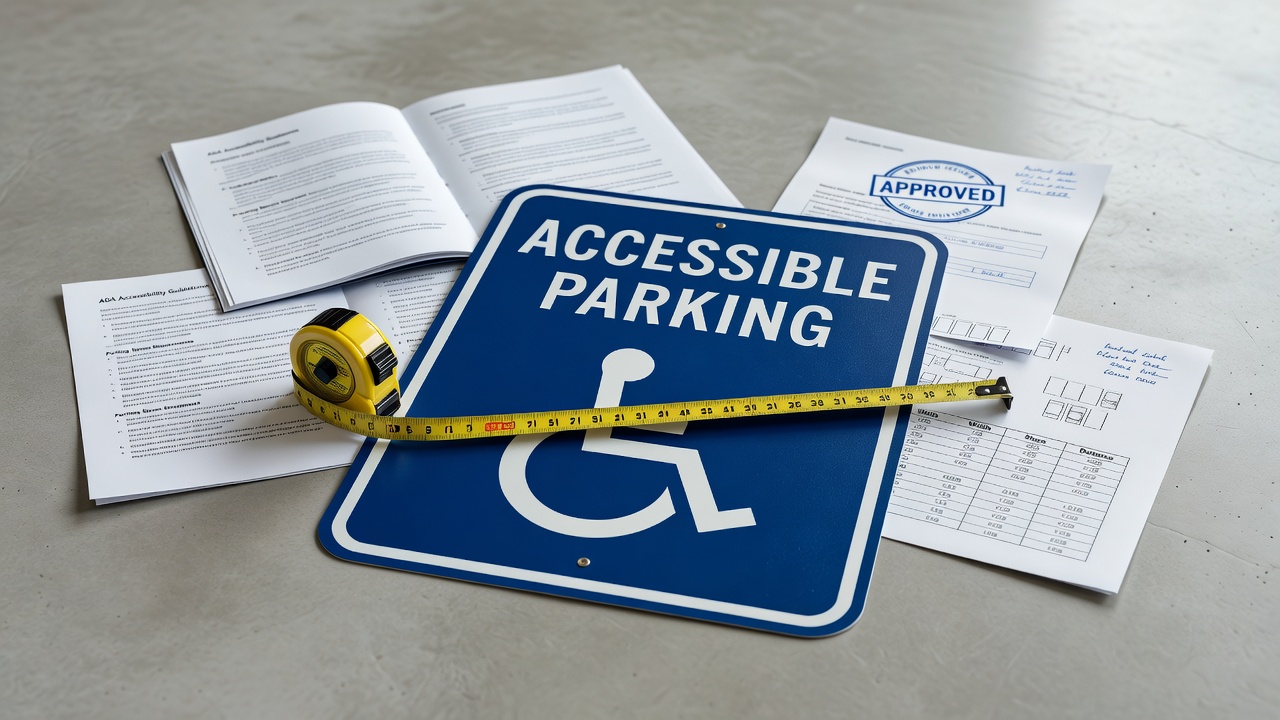
Missouri commercial properties can face fines of up to $75,000 per violation for non-compliant ADA parking. This guide covers federal and state requirements every property manager in Springfield should know.
Required Accessible Spaces by Lot Size
| Total Spaces | Required Accessible |
|---|---|
| 1–25 | 1 |
| 26–50 | 2 |
Need your lot assessed for ADA compliance in Springfield? Contact us for a free evaluation.
ADA parking requirements are one of those topics that seem simple until a property owner is forced to interpret them under pressure. The number of accessible spaces, the type of van-accessible stall, the access aisle dimensions, the signage placement, and the route to the entrance all have to work together. If one piece is off, the lot can become confusing or non-compliant even if it looks fine at first glance.
That is why Springfield managers should not treat ADA striping like ordinary repainting. A compliant lot starts with the right stall count for the total number of parking spaces and then adds the correct markings and signs so the accessible path is obvious. In practice, that means measuring carefully, documenting the layout, and understanding how the lot functions after people start using it.
The main compliance questions owners should ask
- Does the lot have the correct number of accessible spaces for its total count?
- Are at least some of those spaces van-accessible?
- Are the access aisles wide enough and clearly marked?
- Are the signs visible and mounted correctly?
- Can someone follow a clear path from the parking space to the building entrance?
Those questions are a helpful starting point because they focus on usability, not just paint. A lot can have the right colors and still fail to function if the route is unclear or the accessible stalls are placed in a poor location. In Missouri, that can create complaints, rework, and unnecessary cost for the property owner.
Why compliance is also a business issue
A compliant lot does more than reduce risk. It makes the property easier for visitors to trust. When the accessible spaces are easy to find and the parking layout feels orderly, the whole site feels better managed. That matters for retail centers, medical offices, churches, office buildings, and mixed-use commercial properties throughout Springfield and Greene County.
The best compliance projects are ones that solve the code issue and improve the property’s overall usability at the same time. That is why a practical contractor should be able to explain the space count, the access aisles, the signage, and the way the layout fits the building. The goal is not just to satisfy a rule. It is to make the lot work better for everyone who uses it.
What property owners should do before repaving or restriping
Before a lot is repaved or restriped, it is smart to review the current accessible layout and confirm whether the design still fits the site. Repaving can create an opportunity to correct old mistakes, move bad spaces, and create a cleaner layout than the original one. If the property is already being maintained, the compliance update can often be folded into the same project instead of handled later as a separate problem.
That is one of the biggest reasons this topic deserves a detailed guide: the work pays off most when it is planned early, measured correctly, and tied to the site’s real use. A well-timed ADA update is an investment in both compliance and long-term property quality.
How to reduce the risk of repeat problems
The easiest way to avoid repeat ADA issues is to document the lot after the work is complete. Keep the measurements, note the accessible route, and file the photos with the property records. That makes it easier to compare the next inspection or repaving event to the current condition.
It also helps to review the accessible layout any time the lot changes. Even small modifications can affect the total parking count or the location of the accessible spaces. A proactive review is far cheaper than a rushed correction after someone raises a concern.
For Springfield properties, that habit creates a much more stable compliance process and gives the manager more confidence that the lot remains in good shape as the property evolves.
The safest approach is to measure before you paint
Even when a property owner thinks the lot already looks compliant, measurement is the only reliable way to know. Stall counts and aisle widths are easy to misread from memory, and repaving can change the usable geometry more than people expect. Measuring first prevents costly corrections later.
That simple step is the difference between hoping a lot is compliant and actually knowing it is compliant.
Documenting compliance pays off later
Once the work is finished, keep the file with the measurements, layout notes, and photos. If the lot changes later, that record makes it easier to decide whether the existing layout still works or whether the accessible area needs to be adjusted again.
A quick review is better than a costly correction
If the lot is already in use, a small layout review can save a lot of time. Confirm the current parking count, look at the accessible route, and make sure the signage is in the right spot before any paint goes down. That process keeps the project focused and avoids surprises once the lot reopens.